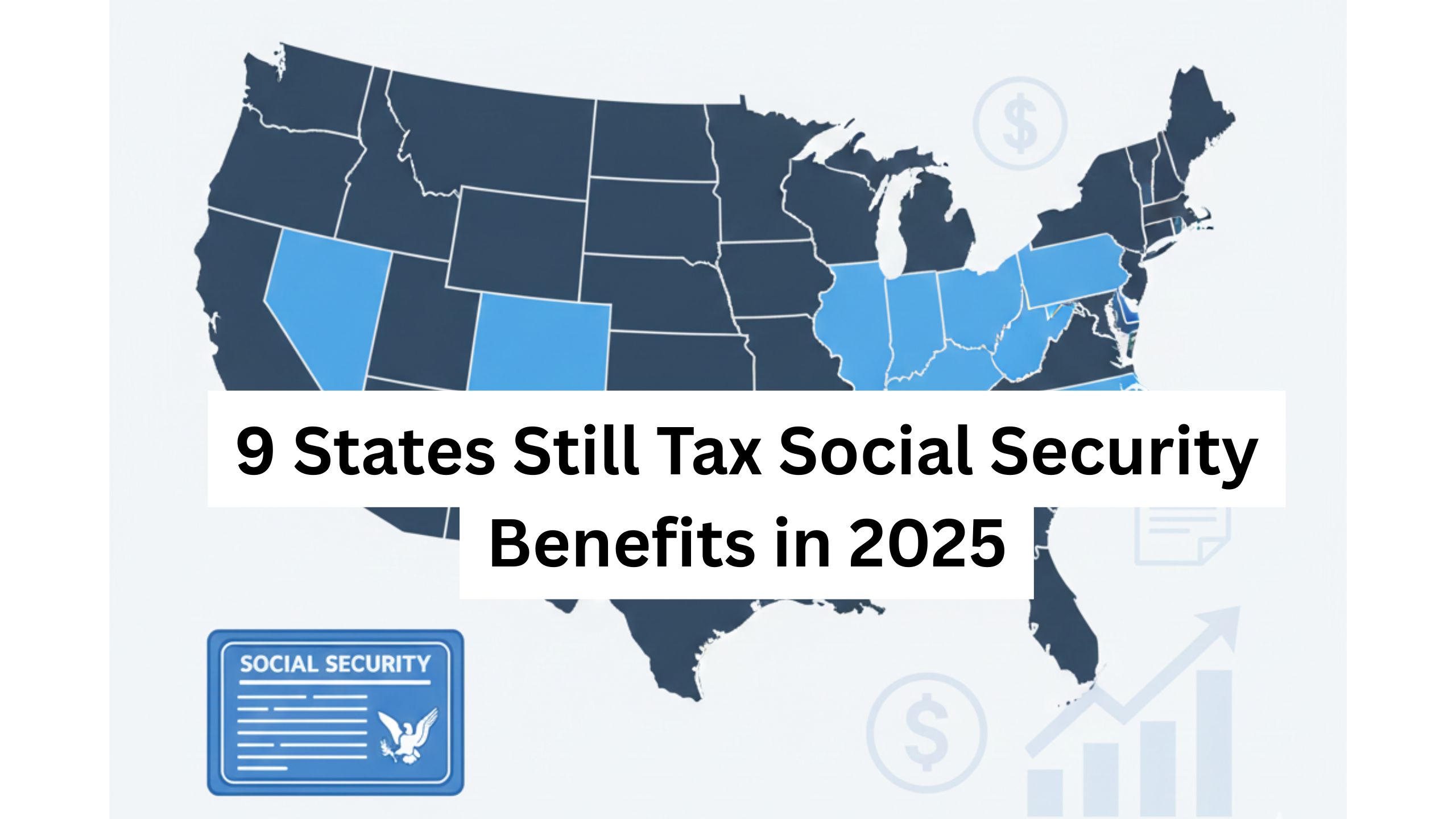
These 9 U.S. States Still Tax Social Security Benefits in 2025: What Retirees Must Know
Many Americans assume Social Security benefits are completely tax-free, but that’s not always true. While most states no longer tax Social Security income, nine U.S. states still tax Social Security benefits in 2025, depending on your income, age, and filing status. If you’re a retiree or planning retirement, understanding Social Security taxes by state is critical for protecting your income and maximizing retirement savings.
This guide explains which states tax Social Security, how the rules work, and how retirees can legally reduce or avoid Social Security taxes.
Is Social Security Taxable in the United States?
Yes, Social Security benefits can be taxable at the federal level and, in some cases, at the state level. The federal government taxes Social Security benefits when your combined income exceeds certain thresholds. Combined income includes adjusted gross income, non-taxable interest, and half of your Social Security benefits.
On top of federal rules, state taxation of Social Security benefits varies widely. Some states fully exempt benefits, while others partially tax them based on income or age.
Also Read: Compare Car Insurance Quotes in One Place – December 2025 USA Guide
The 9 States That Tax Social Security Benefits
As of 2025, the following nine states still tax Social Security benefits in some form:
Connecticut Social Security Tax Rules
Connecticut allows many retirees to avoid Social Security taxes. Individuals earning $75,000 or less and married couples earning $100,000 or less can deduct 100% of their benefits. Higher earners may have up to 25% of Social Security benefits taxed, making Connecticut a partial-tax state.
Minnesota Social Security Tax Explained
Minnesota taxes Social Security benefits based on income thresholds. Benefits are fully exempt for lower-income retirees, but middle- and high-income retirees may pay partial or full state tax on federally taxable Social Security benefits.
Montana Social Security Tax Overview
Montana allows full deductions for Social Security benefits if income stays below $25,000 for single filers or $32,000 for joint filers. Above these limits, only a portion of Social Security income is deductible, leading to some state tax liability.
New Mexico Social Security Tax Update
New Mexico has recently raised income limits. Single filers earning under $100,000 and married couples earning under $150,000 are exempt from Social Security tax. This change has made New Mexico more retirement-friendly for middle-income Americans.
Rhode Island Social Security Tax Rules
Rhode Island fully exempts Social Security benefits for retirees under specific income limits. Married couples earning $130,250 or less and single filers earning $104,200 or less typically pay no state tax on Social Security benefits.
Utah Social Security Tax Policy
Utah may tax Social Security benefits, but the state offers a retirement tax credit that can significantly reduce or eliminate taxes for many retirees. Eligibility depends on income and filing status.
Vermont Social Security Tax Details
Vermont offers full exemptions for lower-income retirees but gradually phases out benefits as income rises. Higher-income retirees may lose the exemption entirely, making Vermont less favorable for wealthier retirees.
West Virginia Social Security Tax Changes
West Virginia is phasing out Social Security taxes. In 2025, retirees can deduct 65% of Social Security benefits, and by next year, West Virginia will no longer tax Social Security at all, making it a rapidly improving retirement destination.
How States Decide to Tax Social Security Benefits
States typically tax Social Security benefits based on income levels or age requirements. Some states offer deductions, exemptions, or credits to offset taxes. In certain states, Social Security income is included in taxable income, while others allow partial or full subtractions.
How to Avoid Paying Taxes on Social Security Benefits
One of the best strategies to reduce Social Security taxes is smart retirement planning. Using Roth IRA withdrawals, which are tax-free, can help keep taxable income low. Health Savings Accounts (HSAs) also offer tax-free withdrawals for qualified medical expenses and don’t count toward taxable income.
Another long-term strategy is choosing to retire in states that do not tax Social Security, a growing trend across the U.S.
Final Thoughts for U.S. Retirees
Understanding which states tax Social Security benefits can save retirees thousands of dollars each year. With careful income planning, tax-advantaged accounts, and awareness of state rules, most Americans can significantly reduce or eliminate Social Security taxes altogether. As more states move away from taxing benefits, retirees now have more flexibility than ever to protect their retirement income.
ALso Read: 6-Month vs 12-Month Car Insurance: Which Is Better in 2025?
Get Insurance alerts directly on WhatsApp 📲
Home, Renters, Health, Life, Auto & Travel updates – Join our free channel.