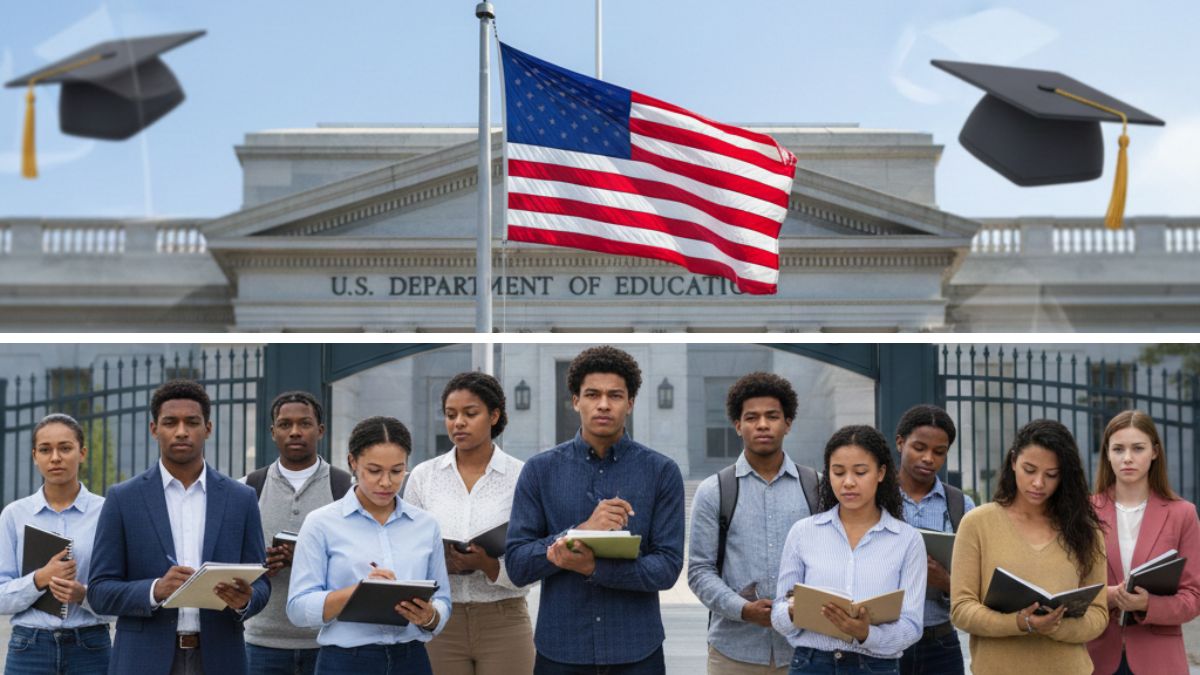
U.S. Education Department Backs End of Race-Based College Grant Programs After DOJ Opinion
The U.S. Department of Education has taken a major step that could reshape federal education funding across the country. U.S. Secretary of Education Linda McMahon has publicly supported a new legal opinion from the Department of Justice’s Office of Legal Counsel (OLC), stating that race-based higher education grant programs are unconstitutional under current Supreme Court precedent.
This decision directly affects multiple long-running Minority Serving Institution (MSI) programs, which have historically distributed federal education grants based on racial or ethnic eligibility criteria.
DOJ Opinion Declares Race-Based Education Grants Unconstitutional
According to the OLC opinion released on December 2, 2025, racial quotas and race-based preferences used to determine eligibility for federal education funding violate the equal protection component of the Fifth Amendment. The opinion follows the Supreme Court’s landmark ruling in Students for Fair Admissions v. Harvard, which sharply limited the use of race in education policies.
Secretary McMahon stated that taxpayer-funded education programs must be based on merit and fairness, not race. She emphasized that the federal government cannot legally attach race-based conditions to education grants, calling the move a necessary correction in federal policy.
Trump Administration Pushes Back Against DEI in Education
The announcement aligns with the Trump Administration’s broader effort to dismantle Diversity, Equity, and Inclusion (DEI) policies in government-funded programs. The Education Department framed the decision as a commitment to constitutional compliance and responsible use of taxpayer dollars.
The administration argues that race-neutral education funding ensures equal opportunity for all institutions while avoiding legal risks tied to affirmative action-style programs.
Hispanic-Serving Institutions at the Center of Legal Challenge
The issue escalated in July 2025 when the U.S. Solicitor General concluded that Hispanic-Serving Institution (HSI) programs violate constitutional protections. Following that determination, the Department of Justice declined to defend these programs in lawsuits filed by Students for Fair Admissions and the State of Tennessee.
In response, the Department of Education requested a full legal review from OLC to assess whether MSI programs relying on racial classifications could survive constitutional scrutiny.
Federal Education Funding Reprogrammed in September 2025
On September 10, 2025, the Department announced it would reprogram discretionary MSI funding into other federal education grant programs that do not raise constitutional concerns. While approximately $132 million in mandatory funding had already been disbursed and could not be redirected, no previously awarded funds will be clawed back.
This means colleges that already received MSI grants will not be required to return money from earlier fiscal years, even as the programs are phased out.
List of Education Grant Programs Affected
The OLC opinion impacts a wide range of higher education grant programs, including:
- Developing Hispanic-Serving Institutions
- Promoting Postbaccalaureate Opportunities for Hispanic Americans
- HSI STEM and Articulation Programs
- Native American Serving Non-Tribal Institutions
- Asian American and Native American Pacific Islander Serving Institutions
- Minority Science and Engineering Improvement Program
- Predominantly Black Institutions formula and competitive grants
- Ronald E. McNair Postbaccalaureate Achievement Program
- Student Support Services
- Alaska Native and Native Hawaiian Serving Institutions
- Native Hawaiian Career and Technical Education Program
These programs collectively represent a significant portion of federal higher education funding.
What This Means for U.S. Colleges and Universities
As the Department of Education evaluates the full impact of the OLC opinion, colleges nationwide may need to adjust their funding strategies. Institutions previously classified under race-based criteria could see reduced access to targeted grants, while new race-neutral funding models may emerge.
Secretary McMahon confirmed that the department plans to work with Congress to reform higher education funding programs in a way that complies with the Constitution while continuing to support student success.
The Future of Federal Education Grants in the USA
This decision marks a turning point in how federal education grants are distributed in the United States. With affirmative action policies increasingly restricted, education funding in the USA is shifting toward constitutionally neutral frameworks.
As legal challenges continue and Congress weighs possible reforms, the future of higher education funding will likely focus on income-based, performance-based, and need-based criteria, rather than race.
For students, colleges, and policymakers alike, this change could redefine access to billions in federal education funding for years to come.
To access a copy of the OLC opinion, click here.
Also Read: Trump Gold Card Visa USA: $1M Fast-Track Green Card Sparks Legal Debate
Get Insurance alerts directly on WhatsApp 📲
Home, Renters, Health, Life, Auto & Travel updates – Join our free channel.